
Update: December 22, 2024
Congress has passed the American Relief Act, 2025, a comprehensive funding bill that prevents a government shutdown and addresses a range of priorities.
This new legislation, signed into law by the President, extends federal funding through March 14, 2025, and secures significant resources for disaster recovery, infrastructure, public health, and economic resilience.
The bill, among other provisions, provides full federal funding to replace the Francis Scott Key Bridge, authorizes the transfer of RFK Stadium to Washington, DC, transfers the DC National Guard’s 121st Fighter Squadron, which flies F-16 aircraft, to the 175th Wing of the Maryland Air National Guard, and allocates approximately $100 billion for natural disaster recovery efforts.
Update: December 18, 2024
The bipartisan deal to prevent a government shutdown—and secure full federal funding to replace the Francis Scott Key Bridge—has collapsed. Without action, a shutdown begins Saturday, December 21, at 12:01 am, leaving Maryland’s federal workforce and economy particularly vulnerable to the fallout.
Congressional leaders struck a deal to avert a government shutdown. The agreement includes full federal funding to replace the collapsed Francis Scott Key Bridge, which will deliver critical support for Maryland’s workforce and economy.
Congressional leaders finalized a bipartisan agreement just days before the deadline to avert a government shutdown, extending federal funding through March 14, 2025.
This agreement prevents major disruptions to Maryland’s federal workforce, contractors, and local economies while securing critical investments in infrastructure and disaster recovery.
Key Bridge Replacement: A Big Win for Maryland
The agreement includes provisions to provide full federal funding for replacing the collapsed Francis Scott Key Bridge, a vital transportation link connecting Baltimore City, Baltimore County, and Anne Arundel County.

Its replacement is critical to restoring regional connectivity, supporting the movement of goods and commuters, and bolstering the local economy, which relies heavily on this vital infrastructure for daily operations and commerce.
“With the inclusion in the Continuing Resolution of our Baltimore BRIDGE Relief Act, Congress is now committed to covering the full cost of replacing the bridge. This will allow the bridge to be built as quickly as possible,” US Senators Ben Cardin and Chris Van Hollen said in a joint statement.
The Department of Justice and Maryland’s Attorney General will pursue insurance recoveries and legal claims to reimburse federal taxpayers.
State Workforce and Economy Avoid Shutdown Disruption
The agreement’s stopgap measure spares Maryland the immediate fallout of a government shutdown.
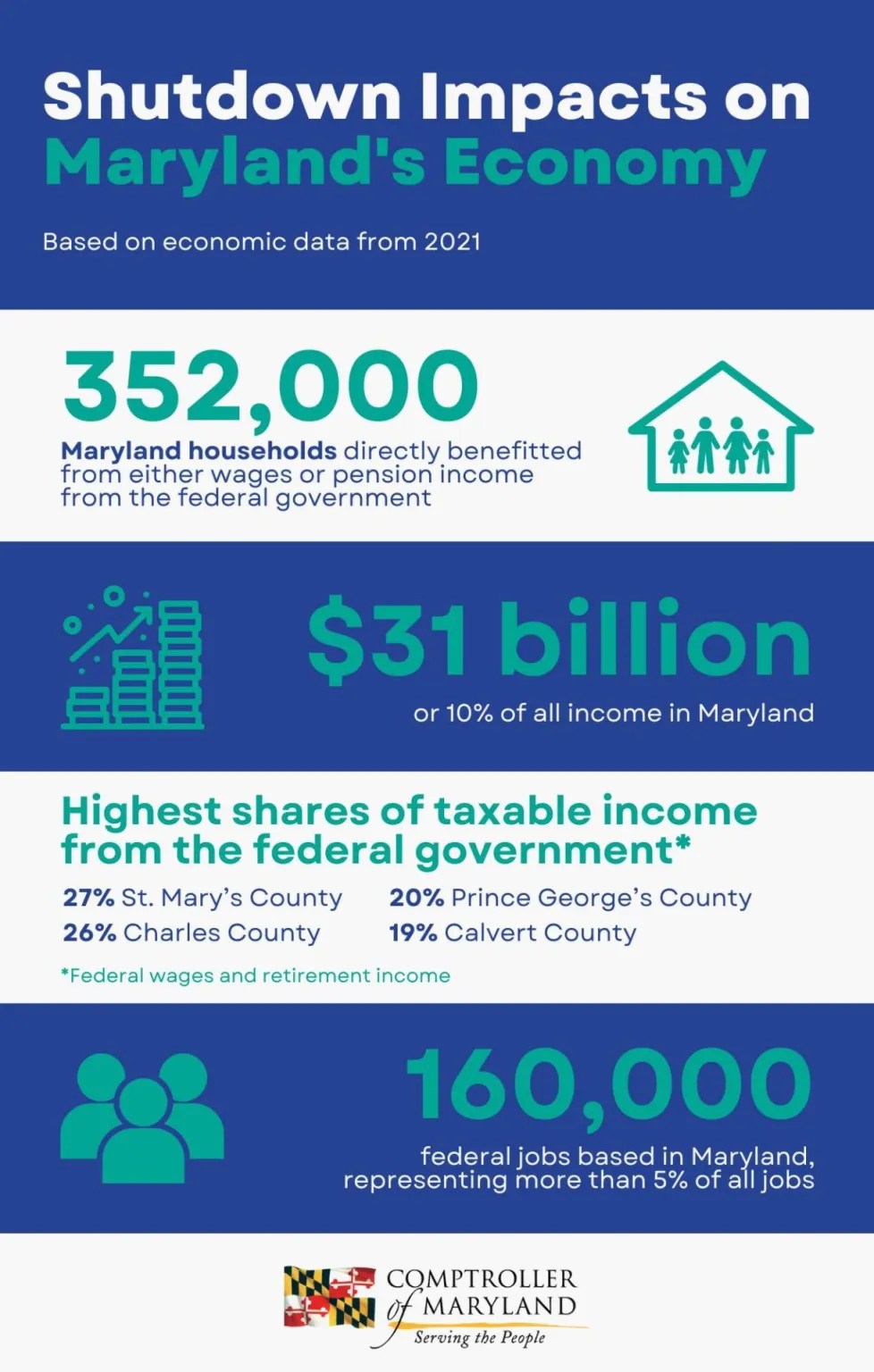
With over 160,000 federal jobs and tens of thousands of contractors, Maryland is disproportionately impacted by federal funding lapses. A shutdown would have resulted in unpaid wages, reduced state and local tax revenue, and economic strain on businesses reliant on federal operations.
The 2018-2019 partial shutdown demonstrated these risks, with Maryland workers missing $778 million in wages and the state losing millions in tax revenue.
Contractors, often left without retroactive pay, would have faced even more significant economic losses. The temporary funding resolution provides much-needed stability but pushes budget negotiations into next year, keeping Maryland’s fiscal landscape in flux.
Disaster Relief Funding
Disaster recovery starts at the local level but relies on solid state and federal partnerships. The continuing resolution allocates $110 billion in disaster relief, delivering critical resources to address damage from recent and future natural disasters:
- $30 billion for FEMA’s Disaster Relief Fund: Replenishes funding for emergency response and infrastructure recovery efforts in areas impacted by storms, flooding, and other disasters.
- $10 billion for farmers: Provides economic assistance to agricultural communities recovering from extreme weather, ensuring resources for crop restoration and farm infrastructure.
- One-year extension of the National Flood Insurance Program (NFIP): Protects access to flood insurance for property owners in high-risk areas, including Maryland’s coastal regions and communities along the Chesapeake Bay.
As previously reported on Conduit Street, the National Association of Counties (NACo) Intergovernmental Disaster Reform Task Force is advancing critical reforms to streamline assistance and strengthen disaster response for counties nationwide Bolstering Disaster Response: NACo’s Action Plan.
RFK Stadium Redevelopment and Maryland Air National Guard Realignment
The continuing resolution directs the federal government to return control of the RFK Memorial Stadium site to Washington, DC. The stadium has been largely inactive since the Washington Commanders moved to Maryland in 1997. With the stadium demolished in 2022, this transfer enables redevelopment plans that could revitalize the area and potentially attract the Commanders back to the District.
In exchange, the Air Force would transfer the DC National Guard’s 121st Fighter Squadron, which flies F-16 aircraft, to the 175th Wing of the Maryland Air National Guard in Middle River by October. This move comes after the US Air Force announced plans to retire Maryland’s fleet of A-10 Thunderbolt II aircraft, which would have left the state’s Air National Guard without a flying mission.
Farm Bill Extension
The continuing resolution includes a one-year extension of the 2018 Farm Bill, ensuring uninterrupted access to vital programs that support Maryland’s agricultural sector while providing stability for rural economies as farmers navigate challenges from volatile weather and global market disruptions.
This extension preserves significant provisions vital to Maryland farmers, including:
- Crop insurance and commodity programs: Protect against market fluctuations and production losses.
- Dairy margin coverage: Offers critical financial stability for dairy farmers.
- Conservation initiatives: Promote sustainable land management and environmental protection.
Healthcare Provisions
The CR includes 500 pages of healthcare measures that extend and enhance critical programs:
- Opioid crisis funding: Expands resources for addiction treatment, recovery programs, and prevention strategies.
- Medicare telehealth flexibilities: Ensures continued access to remote healthcare services, benefiting rural and underserved populations.
- Community health center funding: Sustains operations for facilities delivering essential care to vulnerable populations.
Transportation and Infrastructure
In addition to the Francis Scott Key Bridge replacement, the continuing resolution funds broader transportation and infrastructure needs:
- Federal Highway Administration Emergency Relief Fund: Provides funding to restore roads and bridges damaged by disasters.
- Water infrastructure investments: Supports drinking water system upgrades, bolstering resilience and safety.
Economic Recovery and Small Business Resilience
- $2 billion for SBA disaster loan programs: Helps small businesses and homeowners rebuild after disasters with low-interest loans, stabilizing local economies and restoring livelihoods.
What’s Next?
While Congressional leaders have reached a deal, the continuing resolution still needs to pass both chambers of Congress and be signed by the President by Friday, December 20, 2024, at 11:59 pm, to avert a government shutdown.
Even if enacted, this measure is temporary, highlighting a flawed federal budget process that depends on stopgap measures rather than sustainable fiscal planning. This approach disrupts long-term planning for infrastructure, disaster recovery, and other critical programs.
The incoming presidential administration’s policies and priorities remain unclear, adding to the uncertainty. Maryland’s economy, deeply tied to federal operations, faces additional risks from expiring federal tax provisions and potential debt ceiling disputes that could disrupt national fiscal policy.
This short-term agreement only delays the looming crisis, with Congress set to revisit these challenges before the March 14 deadline. Without meaningful reforms, this pattern will continue, making it harder for governments to plan effectively and address pressing priorities.
At the same time, Maryland faces significant fiscal challenges, with projected deficits and increasing uncertainty about state and local revenues. Federal budget dynamics compound these issues, disrupting long-term stability and planning.
Stay tuned to Conduit Street for more information.


